blog

6 Ways to Acquire and Retain More Patients with Marketing Automation

Posted March 11, 2024 by Jennifer G

As the dental industry continues to evolve, it’s crucial to stay ahead of the curve with modern techniques and technologies that enhance practice efficiency and patient experience.

Marketing Automation is a game-changing tool that every dental practice can leverage to maximize its growth potential.

Table of Contents

  1. What is Marketing Automation?
  2. What are the benefits of Marketing Automation?
  3. 6 Dental Marketing Automation Examples
  4. Automated Email Campaigns for Patient Communication
    1. Engage with Potential Patients Automatically
    2. Expand your online presence through automation
    3. Automated Patient Surveys and Feedback
    4. Personalized Patient Communication Strategy
    5. AI Assistants
  5. Find Out What to Automate
  6. Conclusion

What is Marketing Automation?

Think of marketing automation as a digital assistant—a powerful one. It takes care of the routine and time-consuming marketing tasks, but that’s not all. It’s a smart system that delivers personalized, relevant content to your patients and potential patients automatically, their engagement and connection with your practice.

Why Use Marketing Automation?

The advantages of incorporating Marketing Automation into your dental practice are plentiful:

Boost Patient Engagement: Foster stronger relationships with both existing and potential patients through consistent, timely, and relevant interactions.

Improve Customer Service and Personalize Patient Experience: Automating routine interactions enables more efficient service delivery and personalized patient experience.

Attract New Patients: Deploy targeted outreach efforts to engage potential patients effectively and encourage their conversion.

Save Time and Lower Costs: By automating routine tasks, you reduce operational expenses and free up your team to focus on what matters most – the care of your patients.

Increase Revenue: With targeted, smart, and efficient marketing, you can boost your dental practice’s profitability.

Gain a Competitive Edge: Stay a step ahead in the dental market by adopting progressive, automated marketing strategies.

6 Dental Marketing Automation Examples

  1. Automated Email Campaigns for Patient Communication

Email remains a powerful channel for patient communication. By employing automation, you can personalize each interaction, sending timely appointment reminders, tailored follow-up care instructions, enlightening newsletters, and educational content that specifically caters to individual patient needs. This method greatly enhances patient satisfaction and loyalty, keeping them connected to your practice.

  1. Engage With Prospective Patients Automatically

Turning potential patients into regular ones can be an exhaustive process. By implementing automated lead nurturing strategies, you can streamline this conversion process. Providing potential patients with relevant information and nudging them towards scheduling their first appointment can be the difference-maker in expanding your patient base.

  1. Expand Your Online Presence Through Automation

In this digital age, a positive online reputation can make a huge difference. Automation and AI solutions can help monitor and respond to online reviews and feedback across various platforms, ensuring you maintain an outstanding online presence and trust within your community.

  1. Automated Patient Surveys and Feedback

Continuous improvement and patient satisfaction go hand-in-hand. How do you achieve that? By listening to your patients. Automating patient surveys after their appointments, coupled with responsive action, can greatly enhance your service quality and patient experience.

A bonus: positive responses can trigger requests for online reviews, further bolstering your practice’s digital reputation.

  1. Personalized Patient Communication Strategy

Consider this: each patient comes to your practice with distinct needs and expectations. Just as the treatment approach varies for different dental conditions, communication with patients must be customized to resonate with their unique requirements and concerns.

For instance, consider two potential groups within your patient base: one group seeking routine dental cleanings, and another requiring oral surgery. These two groups have distinct expectations and require tailored messaging for effective engagement.

Through XLDent’s suite of automation services, customizing these communication strategies becomes not just possible, but seamless and efficient. Adopting automation in patient communication within your dental practice enhances operational efficiency, improves engagement, and ensures data accuracy.

Whereas manual methods can lead to errors or breakdowns in efficiency, automation offers instantaneous and error-free distribution of vital information. It permits personalized and timely responses, fostering improved patient satisfaction. This refined approach not only saves money, but time, which allows dental practices to focus more on patient care.

  1. AI Assistants

AI-driven chatbots can instantly — and accurately — respond to patient inquiries. This use of advanced technology not only caters to the modern patient’s preference for quick responses but also reduces the workload on your staff, allowing them to focus on other critical areas.

Innovation and modernity, coupled with a dedication to offering the best patient experience, are the cornerstones upon which XLDent stands. Using automation in your practice is not just an evolutionary step — it’s a strategy to set your practice apart and enhance your delivery of patient care.

Posted in: Dental Technology, Email Marketing, Marketing Services, XLDent Patient Experience, Leave a comment/ No Comments »
Tagged : ,,,,

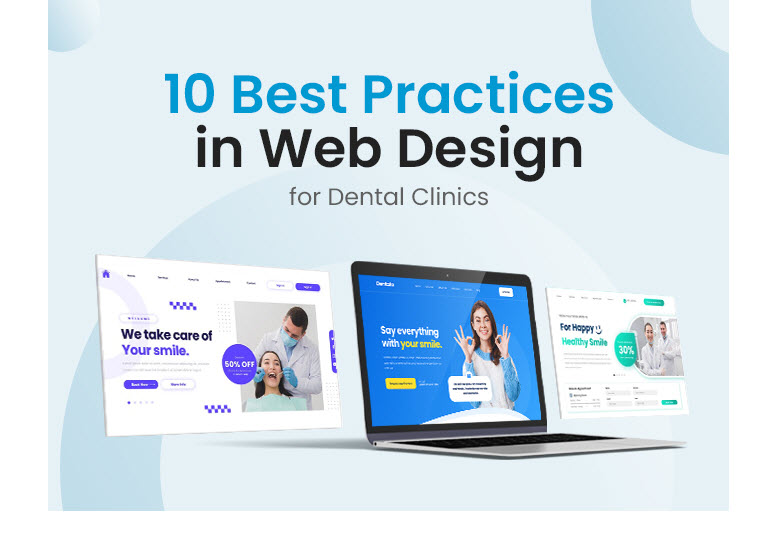
10 Best Practices in Web Design for Dental Clinics

Posted March 11, 2024 by Jennifer G

With more people choosing their clinic through online search, having a well-designed website is crucial for dental practices. It serves as a virtual storefront where potential patients can learn about your practice and make a positive first impression.

To help you make the most out of your online presence, we’ve compiled a list of the top 10 best practices in web design for dental clinics.

By implementing these guidelines, not only will you create an engaging user experience, but you’ll also establish credibility and attract new patients.

1. Clear and Intuitive Navigation:

A well-organized website ensures that visitors can easily find the information they’re looking for. Implement an intuitive navigation menu that prominently displays essential pages such as services, about us, contact, and patient resources. Consider using a logical hierarchy, incorporating drop-down menus where relevant, and utilizing clear labels to guide users seamlessly through your site.

2. Responsive Design for Mobile Compatibility:

In an era where mobile usage is on the rise, it’s vital to optimize your website for various devices. Responsive design ensures that your site adapts and functions flawlessly on smartphones, tablets, and desktop computers. This approach not only enhances the user experience but also improves your search engine ranking, as Google prioritizes mobile-friendly websites in search results.

3. Engaging and High-Quality Visual Content:

Images and videos play a crucial role in capturing visitors’ attention and conveying your clinic’s unique atmosphere and services. Invest in professional photography to showcase your staff, facilities, and state-of-the-art equipment. Additionally, consider creating informative videos to demonstrate certain treatments or introduce your team. Including patient testimonials and before-and-after photos can provide social proof and build trust.

4. Optimize Search Engine Visibility:

Having a visually appealing website is only half the battle. To attract organic traffic and potential patients, you must optimize your site for search engines. This includes incorporating relevant keywords on your webpages, optimizing meta tags, creating unique and informative page titles, and ensuring your website loads quickly. Regularly update your content and add a blog section to share informative articles, further increasing your search engine visibility.

5. Seamless Appointment Booking and Contact Information:

One of the primary purposes of your website is to convert visitors into patients. Ensure that your contact information, including phone number, email address, and physical address, is prominently displayed on every page. Consider incorporating a user-friendly appointment booking form or a click-to-call feature, enabling visitors to schedule appointments effortlessly.

6. User-Centered Design:

When designing your website, keep the user’s experience in mind. Avoid cluttered layouts, use easy-to-read fonts, and ensure that all information is presented in a clear and concise format. Additionally, consider incorporating interactive elements such as quizzes or chatbots that engage visitors and help them find the information they need quickly.

7. Consistent Branding:

Your website should be an extension of your practice’s visual identity. Incorporate your practice’s branding elements such as colors, logo, and fonts throughout the site to create a consistent and recognizable image. This not only reinforces your brand but also enhances the site’s overall visual appeal.

8. ADA Compliance:

Incorporate ADA compliance guidelines when designing your site to ensure it is accessible to all visitors, regardless of their abilities. This includes providing alternative text descriptions for images and videos, ensuring that forms and buttons can be read by screen-readers, and using titles and headings appropriately.

9. Engaging Calls-to-Action:

Include clear and tempting calls-to-action throughout your site that encourage visitors to take action. These can include “Schedule a Consultation Today,” “Download Our Patient Forms,” or “View Our Services.” Make sure these buttons are prominently displayed and utilize color and design to draw visitors’ attention.

10. Regularly Monitor and Update Your Site:

Ensure that your website stays up-to-date by regularly monitoring and updating it. Check for broken links, update information and contact details, and add fresh content such as blog articles or patient testimonials. By constantly improving and refining your site, you’ll attract new visitors and retain existing ones.

Conclusion:

At XLDent, we believe that a successful website is one that delivers an excellent user experience, communicates your practice’s unique value proposition, and ultimately converts visitors into loyal patients.

By adhering to these best practices in web design for dental clinics, you can create a user-friendly and visually appealing online presence that reflects your professionalism and expertise.

Posted in: Dental Practice Management Software, Dental Technology, Dental Web-based Solutions, Marketing Services, Uncategorized, Leave a comment/ No Comments »
Tagged : ,,,

Strategies to Increase Appointments in Your Dental Practice

Posted February 26, 2024 by Jennifer G

As a dental professional, your top priority is providing quality care to your patients. However, to guarantee the success and growth of your dental practice, it is essential to maintain a continuous flow of appointments. In this blog post, we will discuss effective strategies to increase appointments in your dental practice.

Embrace Technology for Easy Booking

Patients expect convenience and efficiency when it comes to scheduling appointments. Integrating innovative dental software solutions, such as XLDent, can simplify your booking process and enhance the patient’s experience. With online appointment scheduling, patients can easily book appointments at their convenience, reducing the time-consuming phone calls.

Optimize Your Online Presence

Your dental practice’s online presence is vital in attracting new patients. Ensure that your website is user-friendly, mobile-responsive, and provides all the information needed about your services, location, and contact details. Implement search engine optimization (SEO) techniques to improve your visibility in online searches. Use social media platforms to connect with potential patients and share valuable content that highlights your expertise. Paid advertising campaigns on social media platforms can help you target specific demographics and reach a wider audience.

Participate in Local Marketing

Employing targeted local marketing strategies can successfully attract new patients to your dental practice. Create partnerships with local businesses, such as gyms, schools, or community centers, and offer exclusive deals or promotions. Join local organizations and participate in community events to build relationships and increase awareness about your practice.

Encourage Patient Referrals

Word-of-mouth recommendations remain one of the most powerful marketing strategies in any industry, including dentistry. Provide exceptional patient experiences and encourage satisfied patients to refer your practice to their family and friends. Consider implementing a referral program that offers incentives to both the referring and new patient. This will not only increase appointments, but also boost patient loyalty.

Offer Special Promotions

We believe in the power of special promotions to attract potential patients. Expand your reach by offering discounted teeth whitening, free consultations, or an exclusive package deal for new patients. Take advantage of innovative software solutions such as XLConnect to simplify these promotional offers and make scheduling appointments easier. Get ready to see your practice succeed.

Implement a Recall System

A recall system is essential to ensure that patients return for their regular checkups and cleanings. Dental software solutions such as XLDent allow you to automate patient recall notifications via email, text, or phone calls. This approach not only keeps your schedule full but also emphasizes your commitment to preventive care. It also helps foster long-term relationships with your patients, as they see you as a trusted partner in their dental care journey.

Optimize Your Treatment Offerings

Expanding your range of services can attract a broader patient base and increase appointment bookings. Stay informed about the latest advancements in dental treatments and technologies, and consider adding services like orthodontics, cosmetic dentistry, or implant dentistry to your practice. By diversifying your offerings, you position your practice as a one-stop solution for complete dental care.

Enhance Patient Communication

Establishing clear and effective communication channels with your patients is vital for maintaining their trust and satisfaction. Use patient communication tools, such as automated appointment reminders, treatment plan explanations, and post-treatment follow-ups. Show genuine empathy, listen to your patients’ concerns, and address them appropriately. Putting your patients at ease and building strong relationships will contribute to a steady flow of appointments.

Increasing dentist appointments requires a combination of technology, marketing, patient engagement, and initiative-taking communication. Embrace the power of dental software solutions like XLDent to reorganize your booking process and enhance patient satisfaction, with features like automated reminders, patient notifications, and online booking capabilities, you can simplify the appointment process.

Utilize digital marketing strategies to expand your online presence and attract new patients. Also, utilize search engine optimization (SEO) techniques to improve your website’s visibility. By implementing these strategies, you can lay the foundation for a successful dental practice that puts patient care at the top of your priorities while achieving sustainable growth.

Posted in: Dental Practice Management Software, Dental Software, Dental Technology, Dental Web-based Solutions, Marketing Services, Recare System, XLDent Patient Experience, Leave a comment/ No Comments »
Tagged : ,,,,,,

Exploring the Impact of Google Reviews on Your Appointment Bookings

Posted February 24, 2024 by Jennifer G

Ensuring that your appointment book is always full as dental specialists is important to the success of your practice. With plenty of options available to patients today, and clinics being easier to find, it is important that practices work hard to maintain their reputation and stance in the community. One of the most significant factors that can impact a practice’s reputation is the online reviews they receive. Particularly, Google reviews can have a substantial impact on appointment bookings. In this blog post, we will explore the importance of Google reviews and how they can impact your practice’s appointment bookings.

Google Reviews carry an enormous sway on consumer choice

First, let us address the elephant in the room: Google is the largest search engine in the world, and it is an essential platform for everyone looking to attract new clients. In fact, according to a study conducted by PowerReviews, nearly all consumers (95%) read reviews and 86% considered them an essential resource when making purchase decisions. This means that if your practice has negative reviews on Google, it could frighten potential patients from booking appointments with you.

But why do reviews matter so much? Research has shown that consumers trust online reviews as much as personal recommendations from friends and family. This means that if your practice has a high rating, it is more likely to attract new patients. Conversely, if your rating is low or you have a considerable number of negative reviews, potential patients may choose to book with another practice.

Encourage your existing patients to leave a review

In addition to impacting patient acquisition, Google reviews can also affect patient retention. Patients are more likely to return to your practice if they have had a positive experience, and online reviews can be an indicator of the quality of your customer service. If a patient has a negative experience and leaves a negative review on Google, other patients may see that review and decide not to book appointments with you in the future.

How Google Reviews can boost your amount of appointments

Now that we have established why Google reviews are important, let us look at how they can impact appointment bookings. As we mentioned earlier, patients are more likely to book appointments with dentists that have high ratings on Google. This means that if your practice has a strong rating, you are more likely to attract new patients. In contrast, if your rating is low, or you have negative reviews, it is more likely that potential patients will book appointments with other specialists.

In addition, the number of reviews that your service has can also impact appointment bookings. According to a study conducted by Power Reviews, when a shopper is exposed to a product page with at least one review, conversions increase by 52.2%. Shoppers visiting product pages that have 11 to 30 reviews have conversion rates that are over 2x higher than those who visit product pages with no reviews. Finally, when products reach the holy grail of 101 reviews or more, we see shopper conversion rates increase by over 250%. Practices with more reviews are seen as more established and trustworthy, which can lead to increased appointment bookings.

How you can leverage Google Reviews into more business

So, what can you do to improve your Google reviews and impact your appointment bookings positively? First, it is essential to provide high-quality customer service to all your patients. This will create positive experiences which, in turn, can lead to positive reviews on Google. Secondly, it is important to ask your patients to leave reviews post-appointment. This can be done through a follow-up email or even a small card with a reminder to leave a review online. Finally, ensure that any negative reviews you receive are addressed and responded to promptly. It is essential to show potential patients that you take feedback seriously and that you are willing to work to improve their experience.

Wrapping up

In conclusion, Google reviews play an integral part in the success of dental practice. They impact patient acquisition as well as retention, and they can significantly impact your appointment bookings. By focusing on providing high-quality patient experiences, asking for reviews, and addressing any negative feedback promptly, you can improve your practice’s rating on Google and increase your appointment bookings. By doing so, you can position your practice as a trusted and renowned provider in your community.

Posted in: Dental Practice Management Software, Marketing Services, XLDent Patient Experience, Leave a comment/ No Comments »
Tagged : ,,

Credit Card Payment Processing: What You Need To Know

Posted July 20, 2022 by Jennifer G

The act of paying for something with a credit card is seamless. First, swipe or insert a card into a machine. Then, wait for the authorization to happen. Lastly, sign off on the purchase, if needed. All of this happens in a few seconds.

However, a lot goes on behind the scenes while you’re waiting for that quick authorization! We’ll discuss what happens when you enter your card, in addition to the security measures that are in place to protect your data long after you make a purchase.

Who takes part in the credit card payment process?

The players involved in the payment process include:

Cardholder: This is the customer that presents their card for payment of goods or services.

Issuer: The issuer (or “issuing bank”) provides the cardholder with their credit and a physical card. They are responsible for approving and declining transactions, customer billing, and collections.

Merchant: This is the business that sells goods or services.

Merchant Account: This is a type of bank account that allows businesses to accept credit, debit, and mobile payments. 

Acquirer: An acquirer (or “acquiring bank”) solicits, underwrites, and owns the accounts merchants need to accept credit cards. They can provide the technology permitting businesses to process transactions, take on chargeback risk, and deposit funds into a merchant’s bank account.

Payment Processor: Payment processors are organizations that partner with acquirers to open merchant accounts, handle support, manage payment processing, and build technology on behalf of acquirers.

Facilitating the payment process

Credit Card Machines

First, a credit card reader or terminal is needed. Today, there are various credit card machines available that can cater to any processing environment. 

Popular devices include point-of-sale (POS) terminals, which support credit cards with magnetic stripes and chips. Some are magnetic stripe (“magstripe”) only, in addition to devices specially made for an unattended or kiosk type of environment.

Near-field communication (NFC) readers are payment terminals that allow tap-to-pay capabilities for contactless credit cards and mobile wallets. 

Payment Methods

The payment transaction starts when the cardholder presents one of the following:

EMV chip card: A payment card containing a computer chip that can validate personal identification numbers (PINs), authorize purchases, verify account balances, and store personal records. Chip cards facilitate EMV® payment processing throughout Europe and the US.

Contactless card: A credit or debit card that does not require physical contact between the card and the credit card machine.

Digital wallet: Digital wallets store a cardholder’s payment information on a mobile app or smartphone device, enabling payment to happen without a physical credit card. Examples include Samsung Pay®, Apple Pay®, Google PayTM, and Fitbit PayTM.  

How does credit card processing work?

Once the card is entered into or “tapped” on the credit card machine, the authorization begins. Authorization is the process where the issuer approves or declines a transaction. Merchants use it to ensure customers have sufficient funds available when they purchase something.  

  1. The credit card information enters a payment gateway, which serves as a connector between the merchant and a payment processor (like Global Payments). 
  2. The payment processor will take this information and send it to the card brand (such as Visa or Mastercard). 
  3. The card brand sends this information to the issuer.

When the issuer receives the cardholder’s information, authentication begins.

  1. The issuer will verify that the cardholder has sufficient funds in the credit line to approve the transaction. 
  2. They may also check the card verification value (CVV) and ensure the billing address matches what is on file to prevent fraud.
  3. If the transaction is approved, the merchant receives authorization, and the issuer places a hold for the amount of the purchase on the customer’s account. The card reader or POS terminal should see a message that says, “Approved.”
  4. The merchant gives the cardholder a receipt at the end of the sale.

At this point, the payment verification process is complete.

How long does a credit card payment take to process?

Payment verification only takes a few seconds at the point of sale. Then, the payment process continues behind the scenes with the settlement process.

  1. Merchants send all approved transactions to the acquirer at the end of the day. This group of transactions is called a batch.
  2. The payment processor routes the batch to the card branch for settlement.
  3. The card brand forwards the transactions to the issuer.
  4. The issuer transfers the funds to the acquirer, and in the process, takes an interchange. Card brands set the interchange fee, and the acquirer is responsible for paying this fee to the issuer.
  5. The acquirer credits the merchant’s account with the approved transactions.
  6. The issuer posts the transaction on the cardholder’s account. The cardholder will be responsible for settling their debt at the end of their billing cycle.

Payment processing times vary, but on average, it takes one to three days. Additionally, batches sent during the weekend or a bank holiday get processed on the next business day.

How does a refund on a credit card work?

Even if a transaction is approved, a cardholder can dispute it for a refund post-purchase. These disputes are called chargebacks. The main reasons for chargebacks include fraud, receiving faulty goods or services, and technical errors, such as double charges. A successful chargeback would mean the return of funds to the cardholder. 

Check out our chargebacks guide for more information.

How do online payment methods stay secure?

The card payment industry has standards in place to protect cardholder information should a security breach occur. The Payment Card Industry Data Security Standard (PCI-DSS) lays out the minimum security features needed to limit the chances of compromised data.  

Encryption is one way to protect cardholder data. With laws becoming more stringent over time, in addition to increasing cybersecurity threats, encryption uses a numeric binary code to shield sensitive data such as the cardholder’s name, account number, expiration date, and service code. The more random the encryption code is, the more difficult it is for hackers to gain access.

Tokenization is another way of protecting cardholder data, particularly the cardholder’s account number. During an online transmission, a token replaces the account number with a unique string of characters. Tokenization differs from encryption in that each token is original and can apply only to a specific merchant and cardholder.  

Finding the best payment processor

Now that you understand how complex the payment process can be, it’s essential to choose a processor that will enhance your business.

A reliable payment processor will integrate with your software to provide a seamless checkout and bookkeeping experience for your clients. Additionally, they will enhance cardholder data protection by helping you and your customers stay PCI compliant, ensuring secure payments every time.

Contact us to learn how our solution can benefit your business and add value to your software.


EMV® is a registered trademark or trademark of EMVCo LLC in the United States and other countries. www.emvco.com.

Apple Pay® is a trademark of Apple, Inc. All trademarks contained herein are the sole and exclusive property of their respective owners.

Google PayTM is a trademark of Google, Inc.  All trademarks contained herein are the sole and exclusive property of their respective owners. Any such use of those marks without the express written permission of their owner is prohibited.

Samsung Pay® is a registered trademark of Samsung Electronics Co., Ltd.

FitBit PayTM is a registered trademark of Fitbit, Inc. and/or its affiliates in the United States and other countries.

Originally published at https://www.globalpaymentsintegrated.com.

Posted in: Dental Practice Management Software, Dental Software, Dental Technology, Dental Web-based Solutions, Leave a comment/ No Comments »
Tagged : ,,,,,